
Do You Greet Everyone in the Room? A Saudi Minister Did, and It Changed Everything
What can Western businesses learn from Saudi leadership? To think like founders. Watching Adel Al-Jubeir, Saudi Arabia’s Minister of State for Foreign Affairs, brief British parliamentarians in Westminster, the Saudi leadership lessons for business were clear: greet every person, back even a 1% chance, explain simply, stay pragmatic and keep every door open.
By Corina Goetz, Saudi and Gulf business expert and founder of Star-CaT
He did not have to do it.
Before anyone said a word, the Minister walked around a committee room in Westminster and shook hands with EVERY person in it. MPs. Members of the House of Lords. Staff. Guests like me. One by one.
This week I sat in on a session of the Conservative Middle East Council, where the Minister of State for Foreign Affairs, His Excellency Adel Al-Jubeir, briefed British parliamentarians for just over an hour. It was about the region, and I leave the politics to others. What stayed with me were the Saudi leadership lessons for business, and how plainly they showed the way Saudi Arabia is being run today: the way a founder runs a company.
Who is Adel Al-Jubeir?
Adel Al-Jubeir is Saudi Arabia’s Minister of State for Foreign Affairs, a member of the Council of Ministers and the Kingdom’s Climate Envoy. He was Saudi Ambassador to the United States from 2007 to 2015 and Foreign Minister from 2015 to 2018.
In other words, he has spent decades in the most demanding rooms in the world. He does not need to impress a committee room in London. That is exactly why the way he behaved in it is worth studying.
Why did one round of handshakes matter so much?
It mattered because it told every person in the room that they counted, before a single argument was made. Greeting everyone is not a courtesy in the Gulf. It is the first move in a relationship.
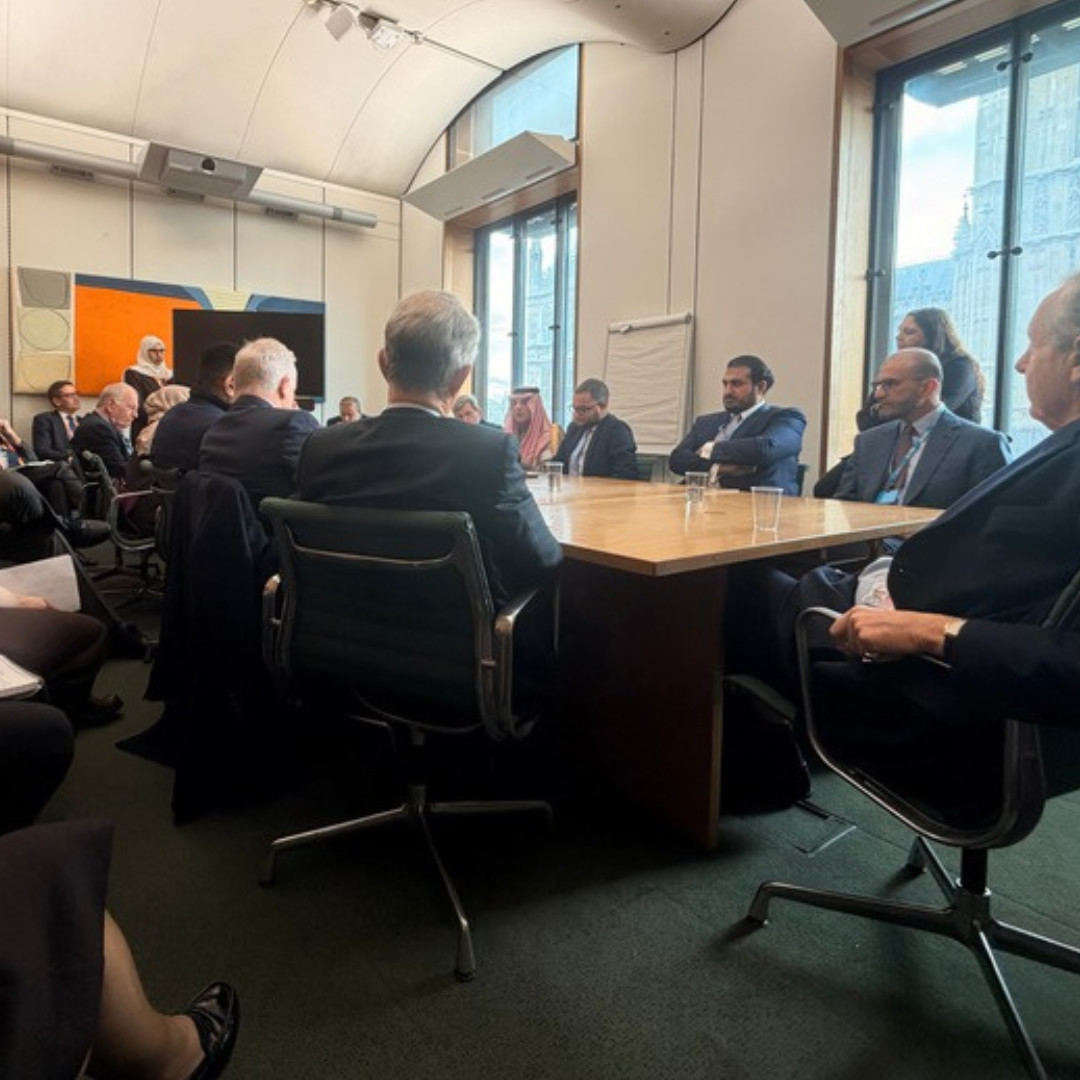
I have worked with Gulf royal households, ministries and family offices for more than 25 years, and I still see Western executives walk into a room, find the most senior person and ignore everyone else. They think they are being efficient. The room thinks they are being rude.
The Minister did the opposite. The most senior Saudi in the building took the time to reach the most junior person in it. Nobody was left out, and nobody forgot it.
If you want to go deeper before your next meeting, I have written a more detailed guide to Saudi boardroom etiquette and what you need to know. You can get the Saudi Boardroom Briefing here.
Does Saudi Arabia really run like a start-up?
In one important way, yes: it is willing to try things that may well fail. That was the line from the session I keep coming back to.
Speaking about one project he is involved in, the Minister was frank. Did he think it would work? Almost certainly not. He put the odds at 99% against. But if there was even a 1% chance it could make a difference, and no better alternative on the table, then you have to try.
That is how a founder thinks. Not “will this definitely work?” but “is the upside worth the attempt, and what else do we have?”
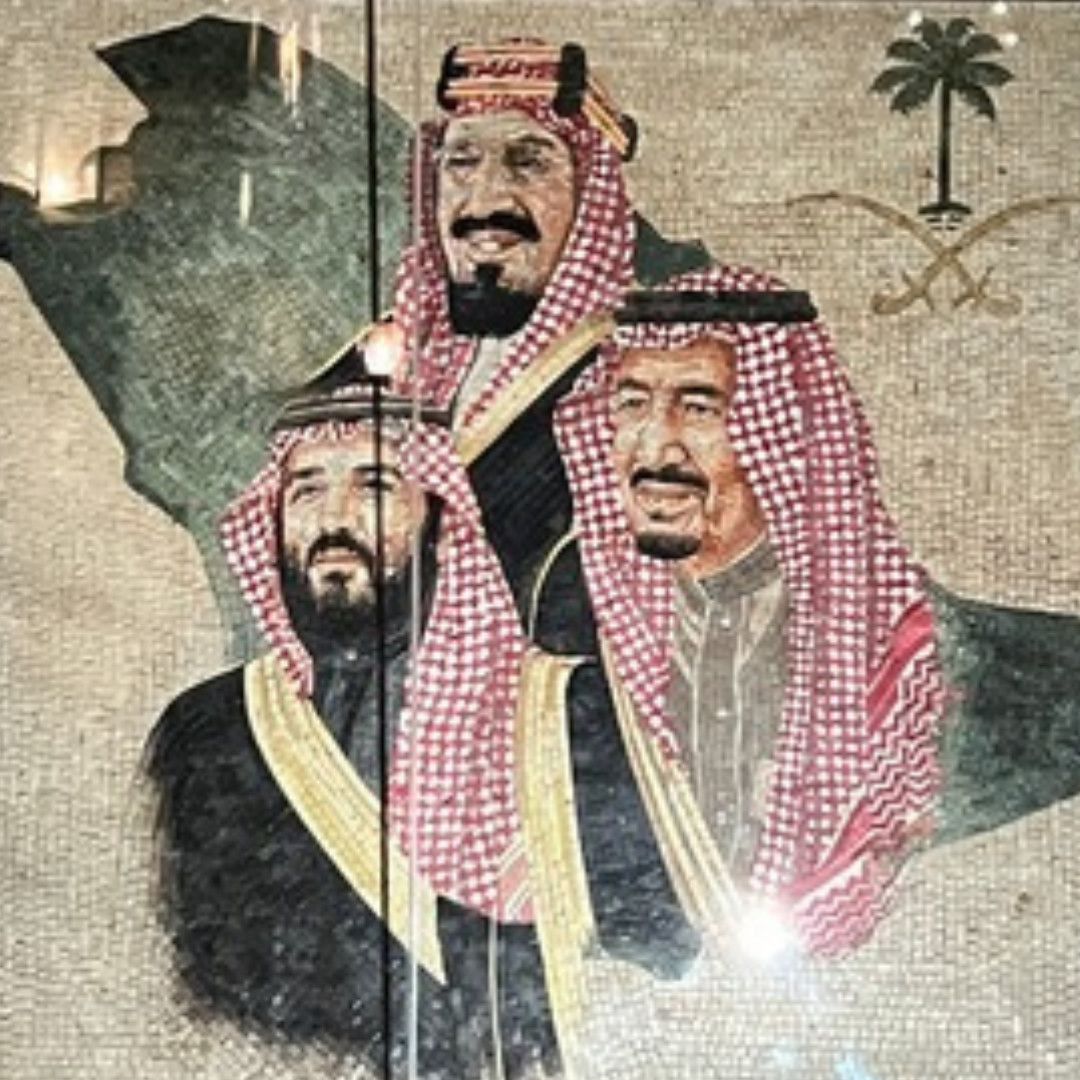
This is the mindset behind Vision 2030, launched in April 2016. Saudi Arabia has opened tourism, entertainment and sport, built new sectors almost from nothing, and rescaled or reprioritised projects in public when the numbers changed. Western commentators often read a change of plan as failure. In a founder’s world, it is iteration.
The lesson for Western firms is uncomfortable. If you wait for certainty before you commit to Saudi Arabia, you will be watching other people take the opportunities. Your Saudi counterparts are not waiting for certainty. They are trying several avenues at once and backing the ones that move.
Why does explaining things simply signal real expertise?
It signals expertise because only people who truly understand a subject can make it simple without making it wrong. The Minister covered one of the most complicated regions on earth in about 20 minutes, and every person in the room could follow him.
He used plain words, clear structure and the occasional joke.
There was no jargon and no showing off. He explained it the way you would to someone intelligent who simply had not lived it.
Many Western presentations in the Gulf do the reverse. Forty slides, dense acronyms, and a closing page nobody reaches. If a minister can explain a region in 20 minutes, your proposal can be explained in five.
What does “pragmatism over ideology” mean for business?
It means Saudi decisions are increasingly judged by one test: does this improve life for our people? The Minister described Saudis as practical people who solve problems, and everything he said came back to that.
The priorities sounded like a company’s strategy page: attracting investment, creating jobs, building infrastructure, better government and connecting the region to the world.
For a Western business, this is the most useful filter you will get. When you pitch in Saudi Arabia, the question is not only “is this good for us?” It is “how does this serve the Kingdom’s people and its plans?” Jobs for Saudis, skills transfer, local investment. If your answer is vague, your proposal will be too.
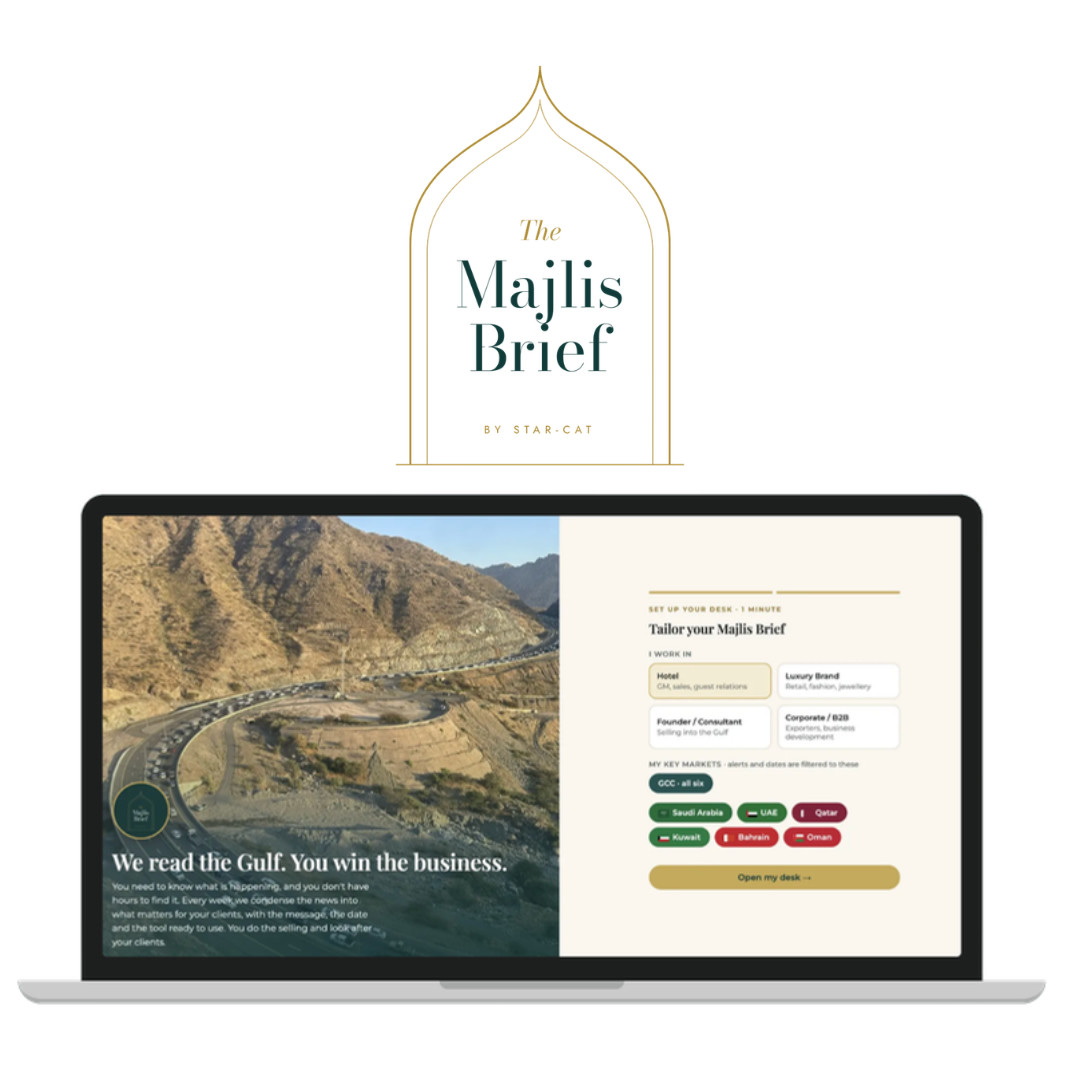
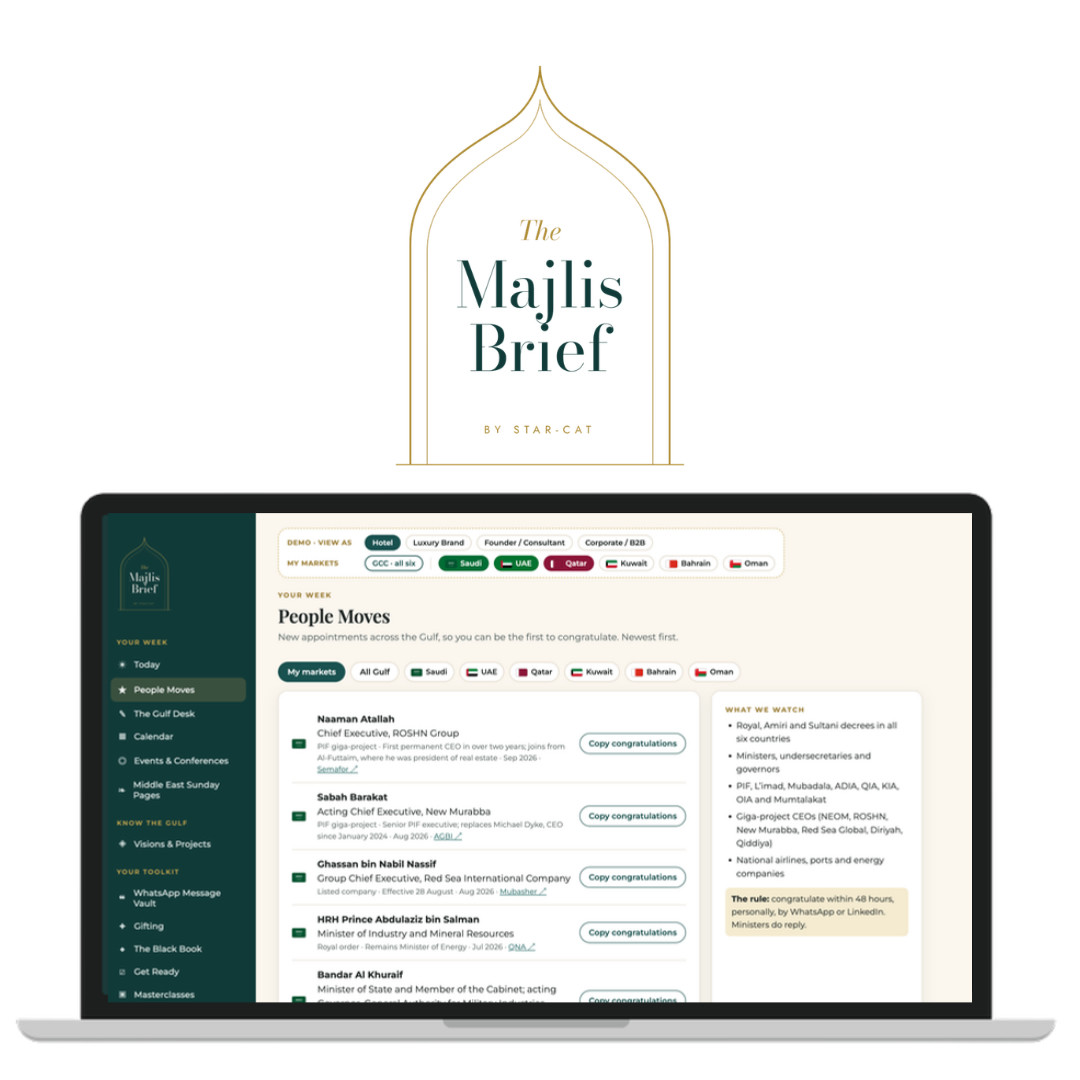
The foundation of building trust with Saudi business partners is understanding what they are building, not only what you are selling. That also means knowing what is happening across the region as it happens. A good understanding of the bigger picture is what separates a supplier from a partner, and this is exactly why I created the Majlis Brief.
Why don’t Gulf leaders try to impose their views?
Because they do not need you to think like them to work with you. The Minister made this point clearly: every country decides what it wants to do, and Saudi Arabia deals with each one bilaterally, on its own terms.
But he was just as clear about the other half. On the bigger questions, there are rules everyone has to respect. You can run your own house your own way. You cannot break the common rules that keep everyone safe and trading.
I found that balance striking, and very practical. Respect people’s choices, align on the non-negotiables.
For Western firms, the translation is simple. Do not arrive in Riyadh to tell your partners how things should be done. They have heard it before. But do take the rules seriously: regulation, Saudisation targets, contracts and the commitments you make in the room. The Kingdom is flexible on style and firm on substance.
He also talked about keeping doors open to people who disagree with each other. Saudi Arabia, he said, talks to everyone. In business, that is a valuable habit. The partner you passed over this year may be the one you need next year.
What do these Saudi leadership lessons mean for Western businesses?
They mean behaving less like a supplier and more like a partner who understands how Saudi Arabia is now run. Here is where to start on Monday:
- Greet everyone. In every meeting, shake every hand, from the most senior person to the most junior. Learn names. The assistant today may be the decision-maker in five years, as I wrote about in the next generation of Gulf leaders.
- Back the 1% where it counts. Stop asking for certainty before committing. Ask what the upside is, what it costs to try and what the alternative is.
- Explain it in five minutes. If you cannot explain your offer simply, you are not ready to present it.
- Lead with their goals. Show how your work creates jobs, skills or investment in the Kingdom before you show how it makes you money.
- Respect the choices, follow the rules. Never lecture. Always deliver what you promised, on time and in full.
These habits change how you are received. The harder part is knowing what is changing around you: which minister has moved, which authority has new powers, which project has been reprioritised and what it means for your next meeting.
The Majlis Brief brings together far more than news alerts. It tells you what is actually going on behind the scenes, and what you need to be doing about it. Ministerial changes and appointments, the GCC calendar and the moves that matter, in 10 minutes a day. Join the Majlis Brief.
What stays with me from Westminster?
I walked out inspired, and I did not expect to. I went in expecting a policy briefing. I came out with a masterclass in how to lead a room.
The Minister spoke to the committee like someone with a vision measured in decades. Saudi leaders do not only think short term. They think long term. Again and again he came back to the same idea: the situation today may not be ideal, but he is very optimistic about the future, and what is being done now is what will make the difference in 50 years. This is the real legacy of a proper vision, and I find it incredible.
The Saudi leadership lessons for business were on show in Westminster this week, for anyone paying attention.
Greet everyone. Try the 1%. Keep every door open.
Give it a try.
Doing business in Saudi Arabia? See how Corina Goetz helps Western executives as a Saudi Arabia business strategist.
Know what is really happening in the Gulf, in 10 minutes a day
Join the Majlis Brief: far more than news alerts. What is actually going on behind the scenes and what you need to be doing about it, with ministerial changes and appointments and the GCC calendar, for people doing business in Saudi Arabia, the UAE, Qatar, Oman, Bahrain and Kuwait.
Corina Goetz is a Saudi and Gulf business expert and the founder of Star-CaT, advising Western companies in Saudi Arabia, the UAE and Qatar. For more than 25 years she has worked with Gulf royal households, ministries and family offices, and helped Western businesses build trust in Saudi Arabia and the GCC. She writes a weekly Middle East blog and The Gulf Desk. See how Star-CaT can help.
Frequently asked questions
What are the main Saudi leadership lessons for business?
The main Saudi leadership lessons for business are to greet every person in the room, back worthwhile opportunities even when the odds are low, explain complex ideas simply, judge decisions by their benefit to people, and respect other parties’ choices while following common rules.
Who is Adel Al-Jubeir?
Adel Al-Jubeir is Saudi Arabia’s Minister of State for Foreign Affairs, a member of the Council of Ministers and the Kingdom’s Climate Envoy. He was Saudi Ambassador to the United States from 2007 to 2015 and Foreign Minister from 2015 to 2018.
Why is greeting everyone important in Saudi business culture?
Greeting everyone matters in Saudi business culture because it shows respect to every person, not only the most senior. Junior colleagues notice, relationships start before the meeting does, and the person you overlook today may be a decision-maker tomorrow.
Is Saudi Arabia run like a start-up?
In its mindset, increasingly yes. Under Vision 2030, launched in 2016, Saudi Arabia tries several avenues at once, accepts that some will fail, and rescales projects when circumstances change, much as a founder iterates on a business.
How should Western companies pitch in Saudi Arabia?
Western companies should keep the pitch short and clear, show how it supports Saudi goals such as jobs, skills and local investment, avoid lecturing partners on how things should be done, and deliver exactly what they promise.

Corina Goetz is a Saudi and Gulf business expert and the founder of Star-CaT, advising Western companies in Saudi Arabia, the UAE and Qatar. For more than 25 years she has worked with Gulf royal households, ministries and family offices, and helped Western businesses build trust in Saudi Arabia and the GCC. She writes a weekly Middle East blog and the Gulf Desk. If you have a live Saudi deal, book a private consultation.

Related Posts
This Post Has 0 Comments