
Make Your Bed: How Qatar and Saudi Arabia Prepare the Next Generation of Gulf Leaders
How is the next generation of Gulf leaders being prepared? Through responsibility, not comfort. Sheikh Tamim bin Hamad Al Thani, Amir of Qatar, told Le Point in 2022 that “education starts with simple things: making your bed in the morning.” Crown Prince Mohammed bin Salman of Saudi Arabia learned by working at his father’s side when King Salman was Governor of Riyadh.
By Corina Goetz, Saudi and Gulf business expert and founder of Star-CaT
The ruler of one of the wealthiest countries in the world was asked about education. He did not talk about universities or scholarships.
He talked about making your bed.
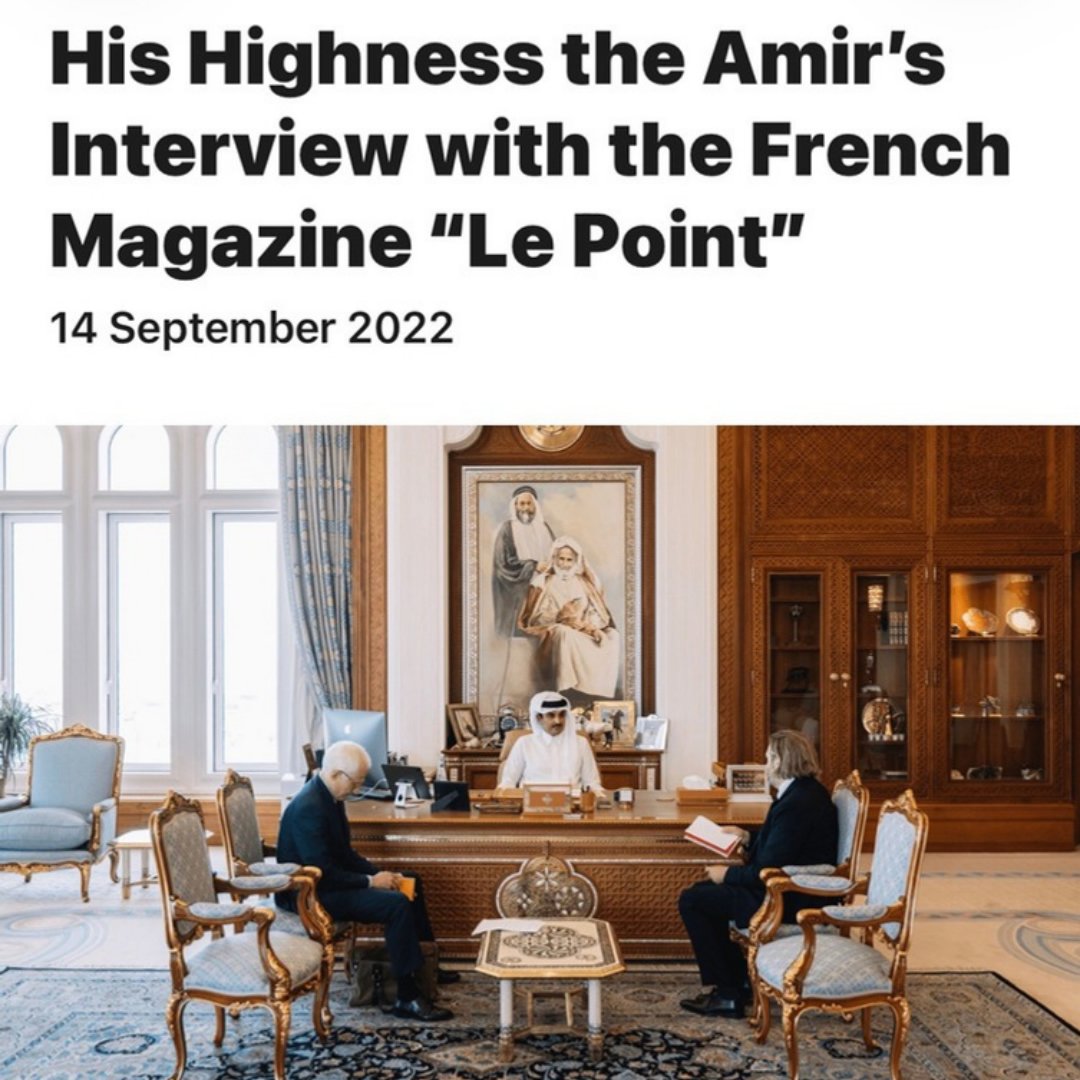
“Education starts with simple things: making your bed in the morning, for example,” Sheikh Tamim bin Hamad Al Thani, Amir of Qatar, told the French magazine Le Point in September 2022. You can read the full interview here.
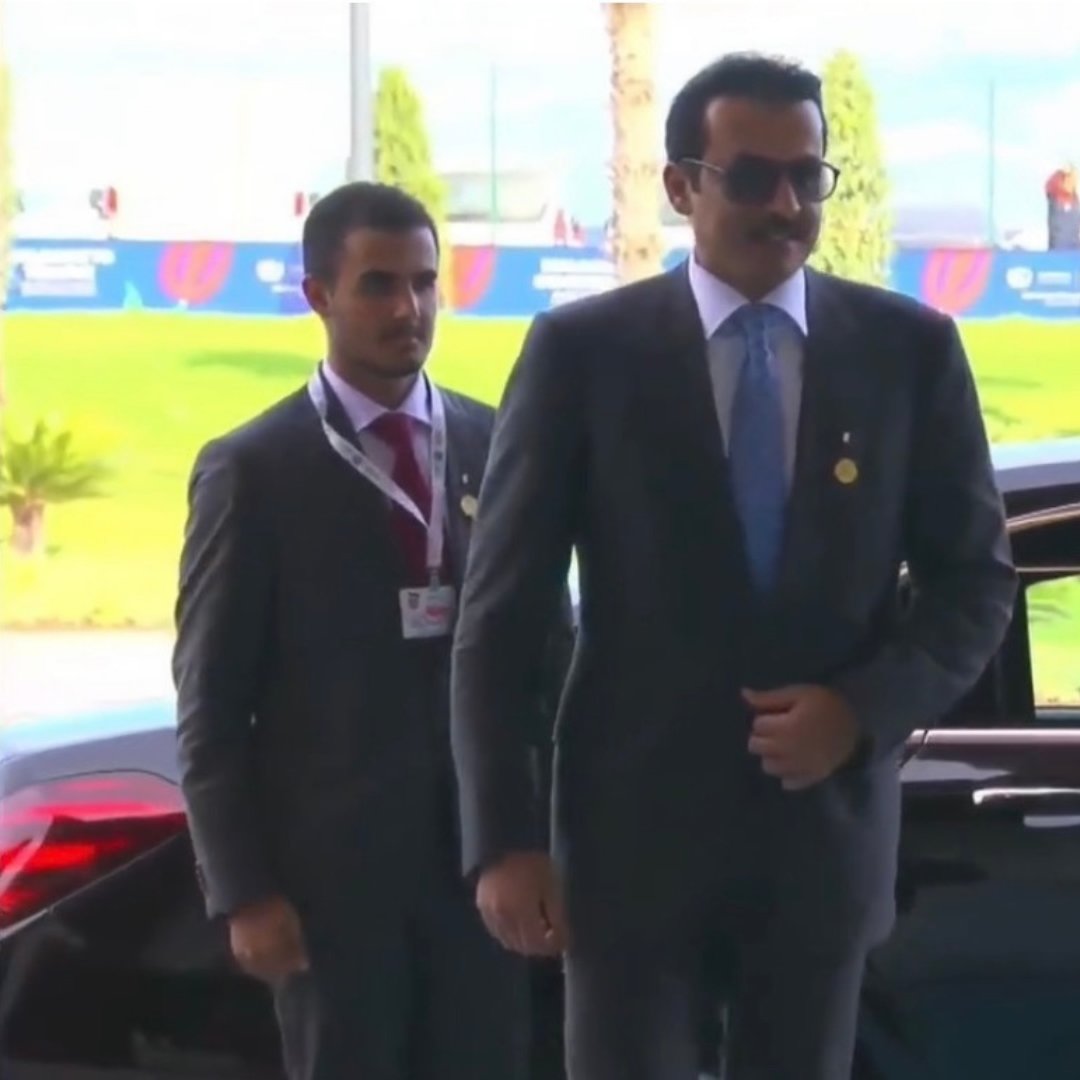
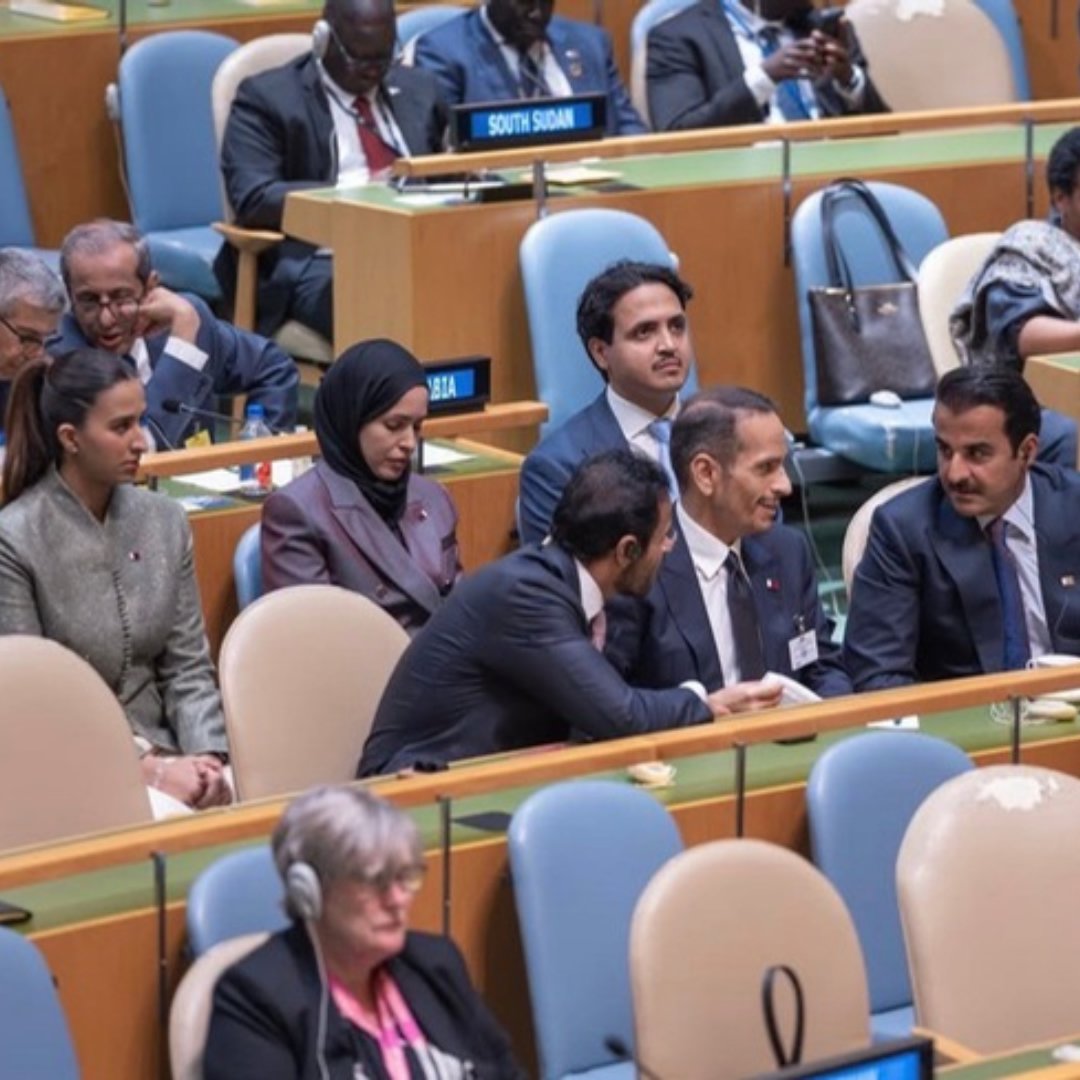
I have thought about that line a lot this autumn, because it says so much about how the next generation of Gulf leaders is raised. In September, his eldest daughter, Sheikha Al Mayassa, joined him at the UN General Assembly in New York. This week, his son Sheikh Hamad was beside him at COP31 in Antalya.
In Saudi Arabia, Crown Prince Mohammed bin Salman took a very different route to the same lesson. No Western university. No Sandhurst. Years at his father’s side in Riyadh instead.
Two leaders. Two paths. The next generation of Gulf leaders is being prepared in more than one way, and the question for Western business is whether anyone is paying attention.
Why does the Amir of Qatar talk about making your bed?
Sheikh Tamim talks about making your bed because the upbringing he describes, and the one he wants for the next generation of Gulf leaders, was built on small responsibilities, not on privilege handed over. In the Le Point interview, he credits his parents with “teaching me to be humble”.
His account is worth reading slowly. At 13, his father sent him to Germany “to find and pay for sports equipment”. At 8, 9 and 10, he spent summers with a family in Malmedy, Belgium, to learn French. Then came boarding school, the Royal Military Academy Sandhurst at 17, and several years in Qatar’s special forces.
None of it is glamorous. All of it is designed to build independence, discipline and the habit of dealing with people who owe you nothing.
As a Saudi and Gulf business expert, with more than 25 years working with Gulf royal households, ministries and family offices, I have learned that the Western stereotype of the idle heir tells you very little. What it hides is how deliberately many Gulf families prepare their children for responsibility, and how early that starts.
How did Crown Prince Mohammed bin Salman learn to lead?
Crown Prince Mohammed bin Salman learned to lead mostly in Riyadh, not abroad, and his path shows that the next generation of Gulf leaders does not need a Western degree to succeed. Unlike many Gulf royals of his generation, he was educated in Saudi Arabia, earning a law degree from King Saud University in 2007.
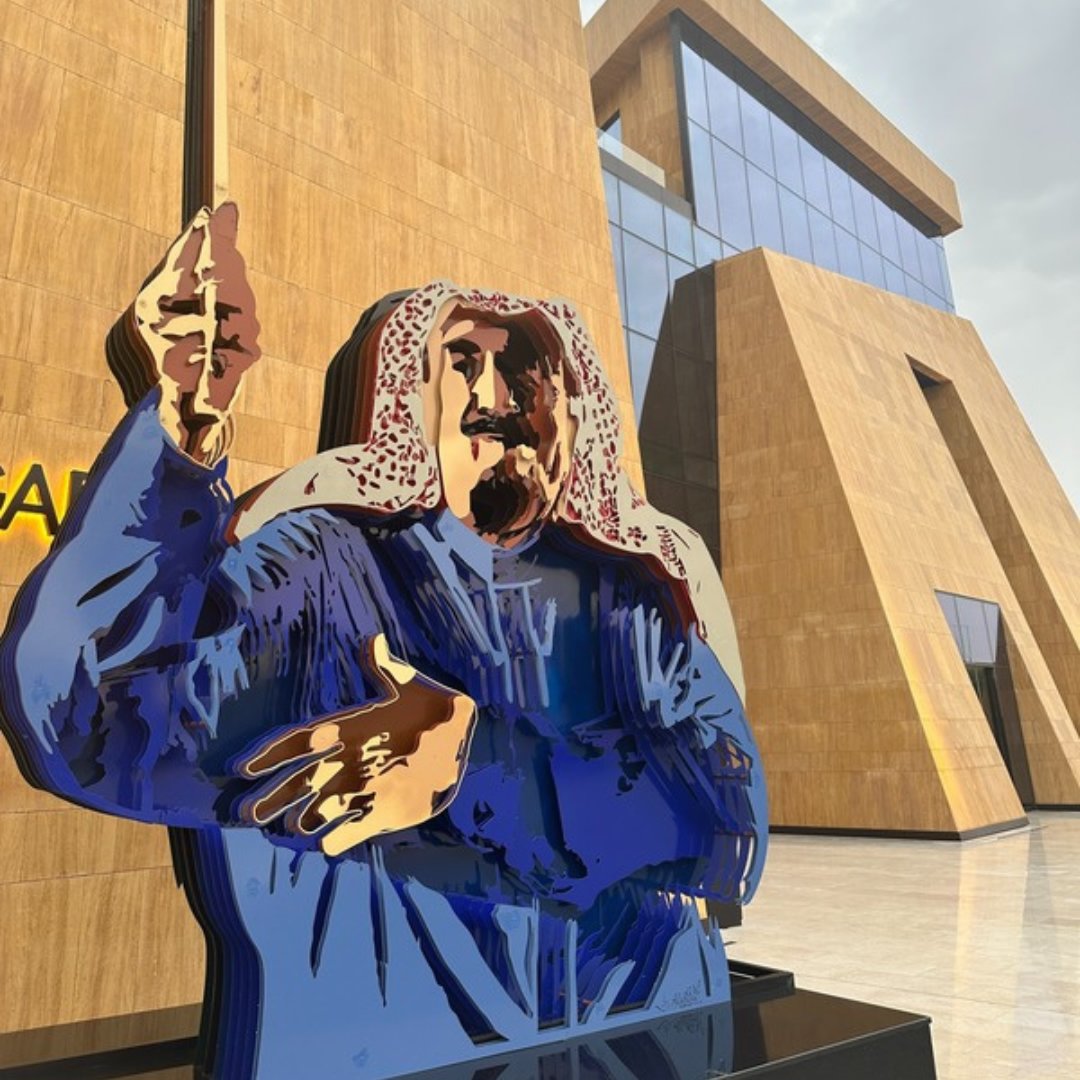

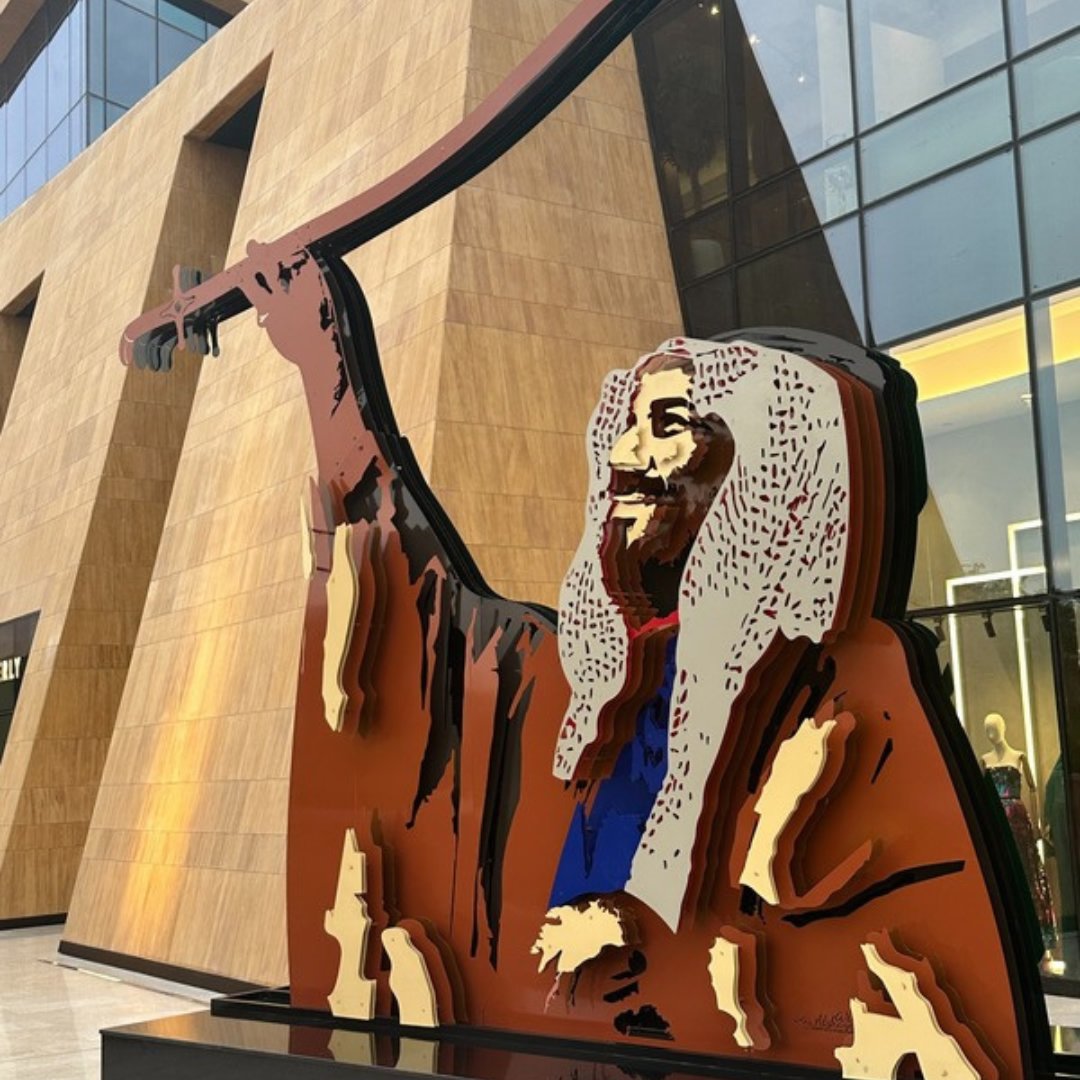
The more important classroom came next. In 2009 he became a special adviser to his father, then Prince Salman, who served as Governor of Riyadh for nearly five decades.
The Governor of Riyadh does far more than run a city. He receives families, tribal leaders, business owners and petitioners. He settles disputes, balances interests and keeps relationships in good order across one of the most important regions of the Kingdom.
Watching that every day taught things no lecture hall can. How decisions are really made. How to listen to people with competing claims. How business, family and loyalty fit together in Saudi Arabia.
He went on to become Minister of Defence in 2015, Crown Prince in June 2017 and Prime Minister in September 2022. Whatever you think of the path, he took what he learned at his father’s side very seriously.
This is what Western firms often miss. They assume that a Western degree is the mark of a modern Gulf leader. Sometimes it is. But some of the most consequential leaders in the region learned their craft at home, watching how power and responsibility actually work.
What does it mean when Gulf leaders bring their children to the UN and COP31?
When a Gulf leader brings his children to the UN or a climate summit, it is exposure, not an announcement. It shows a generation learning diplomacy, protocol and public responsibility by watching them up close.
It is important not to over-read it. Being present is not the same as being appointed, and Qatar has named no crown prince. Western commentators who turn every photograph into a succession story usually tell you more about themselves than about Qatar.
But it is equally a mistake to ignore it. Recently, my post about two men holding hands reached 30,000 people on LinkedIn, because an image people could see carried a meaning many of them could not read. These photographs work the same way.
A young woman in the Qatari delegation at the UN. A young man walking into COP31 beside his father. Both are learning how the world’s most important rooms work, at an age when most of us were learning to drive.
Is the Gulf’s next generation only about royal families?
No. The next generation of Gulf leaders will come from a population that is overwhelmingly young, educated and already entering the workforce, and royal families are only its most visible part. In Saudi Arabia alone, more than half the population is under 30.
The people across the table from you in 2035 are at university, in graduate programmes or in their first government jobs today. Many will have studied in London, Boston or Paris. Many will speak your language better than you speak theirs.
Western firms often assume that this international exposure means the next generation will think like them. I would not bet on it.
What I see is a generation that carries both. Global experience, and values their parents would recognise: family responsibility, loyalty, personal relationships and long-term thinking. Modernisation in the Gulf does not mean becoming Western. And Qatar, Saudi Arabia, the UAE, Kuwait, Bahrain and Oman will each produce a different version of it.
What does the next generation of Gulf leaders mean for Western businesses?
The next generation of Gulf leaders means Western businesses need to build relationships for 2045, not just for the next contract. Most companies track Gulf projects and investment announcements. Far fewer track the people who will run them.
Here is where to start:
- Track people, not only projects. Appointments, new authorities and young officials moving into senior roles tell you where decisions will be made next.
- Read the photographs, and don’t over-read them. Who stands beside a leader at a summit is information. It is not a forecast.
- Treat the younger person in the meeting with the same respect as the elder. The junior member of today’s delegation may chair the board in 15 years. They will remember how you treated them.
- Match the standards they are being raised with. Arrive prepared. Be on time. Keep your word. Humility travels well in the Gulf, and arrogance travels further.
- Think in decades. Gulf families plan in generations. A Western firm that only thinks in quarters will always be a supplier, never a partner.
These steps change your posture. Knowing who has been appointed, which new institutions are taking shape and where the next generation is being given responsibility is the harder part. Nobody has time to follow six countries that closely.
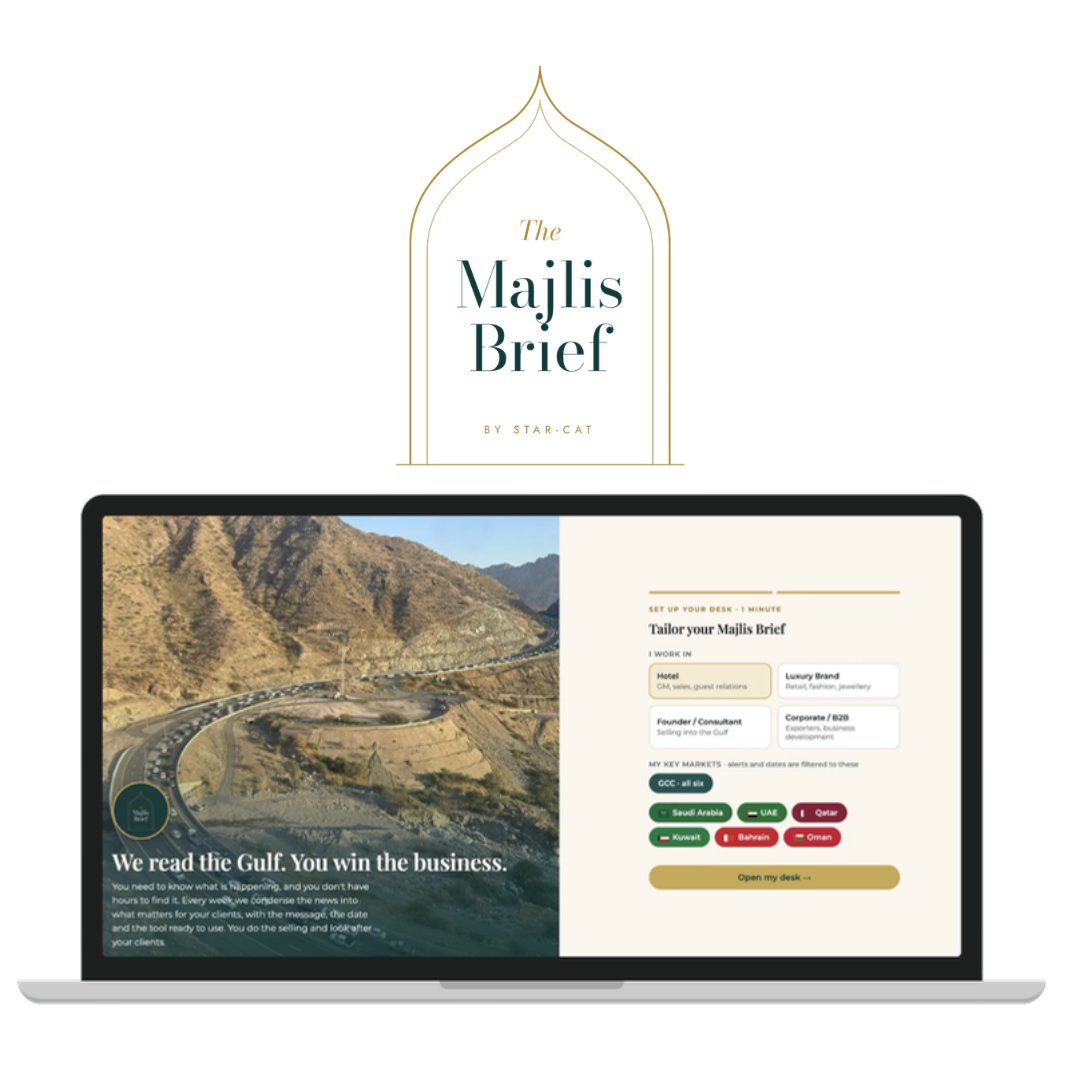
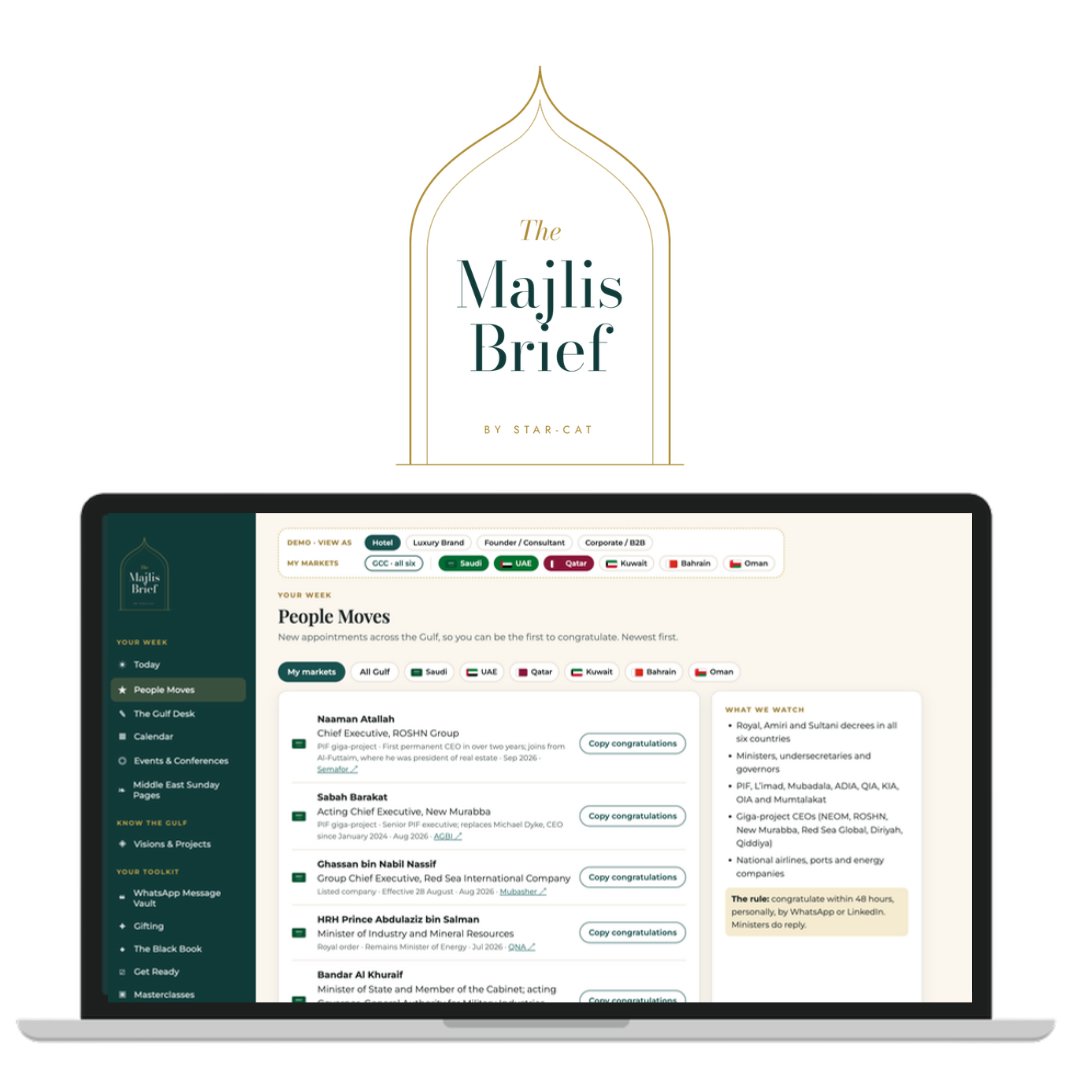
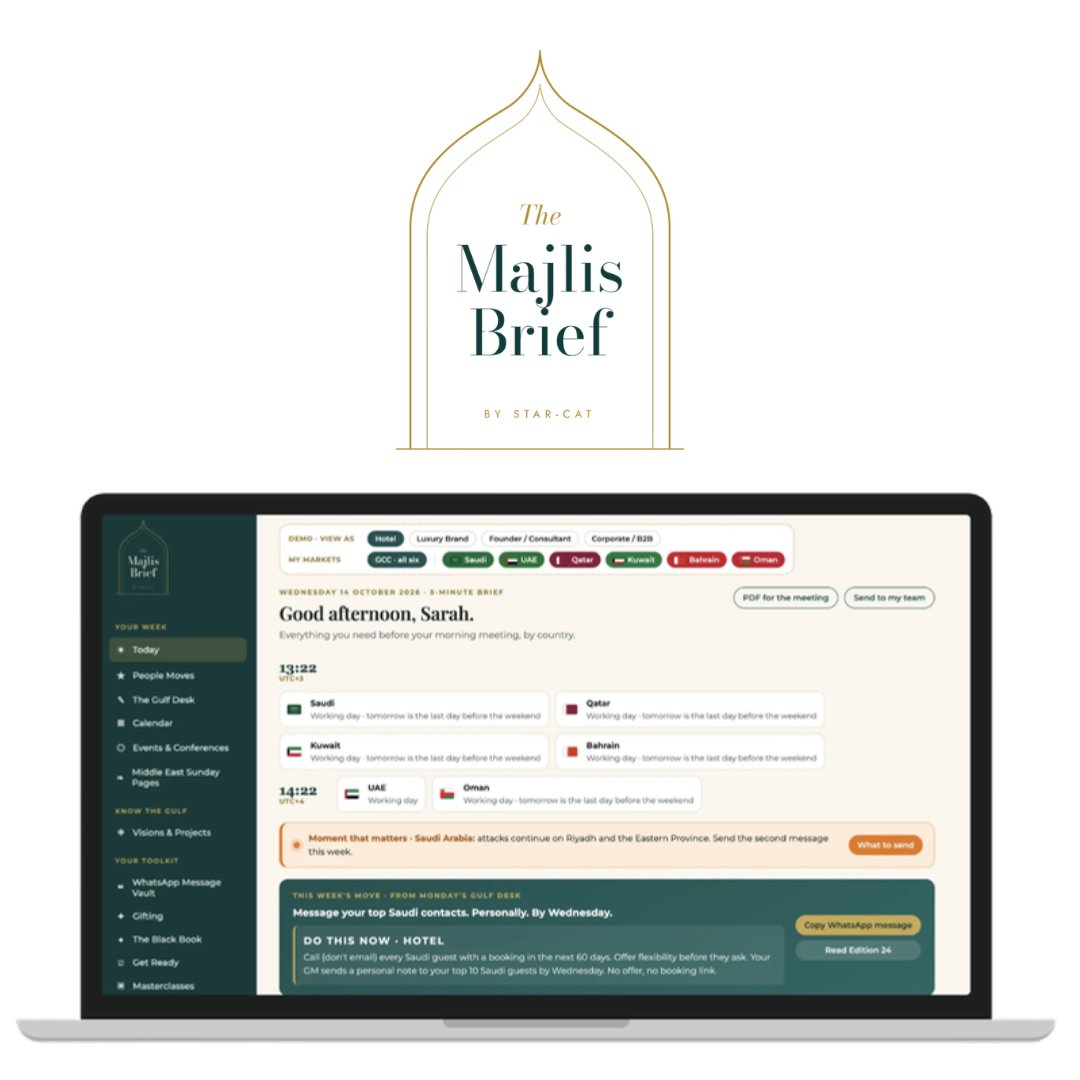
That is why I built the Majlis Brief. It brings together far more than news alerts. It tells you what is actually going on behind the scenes, and what you need to be doing about it. Ministerial changes and appointments, the GCC calendar and the moves that matter, in 10 minutes a day. Join the Majlis Brief.
What should Western firms take from Sheikh Tamim’s lesson?
We spend so much time watching what the Gulf is building that we forget to ask who it is building it for, and who is being prepared to lead it. The next generation of Gulf leaders is learning in plain sight, at summits, at the UN and at home.
Sheikh Tamim learned it in Germany, Belgium and at Sandhurst. Crown Prince Mohammed bin Salman learned it at his father’s side in Riyadh. Different paths, the same lesson for the next generation of Gulf leaders: work hard, stay humble, start small.
It starts with making a bed.
Doing business in Qatar, Saudi Arabia or the UAE? See how Corina Goetz helps Western executives as a Qatar business strategist, Saudi Arabia business strategist and UAE business strategist.
Know what is really happening in the Gulf, in 10 minutes a day
Join the Majlis Brief: far more than news alerts. What is actually going on behind the scenes and what you need to be doing about it, with ministerial changes and appointments and the GCC calendar, for people doing business in Saudi Arabia, the UAE, Qatar, Oman, Bahrain and Kuwait.
Corina Goetz is a Saudi and Gulf business expert and the founder of Star-CaT, advising Western companies in Saudi Arabia, the UAE and Qatar. For more than 25 years she has worked with Gulf royal households, ministries and family offices, and helped Western businesses build trust in Saudi Arabia and the GCC. She writes a weekly Middle East blog and The Gulf Desk. See how Star-CaT can help.
Frequently asked questions
What did Sheikh Tamim say about making your bed?
In a September 2022 interview with the French magazine Le Point, Sheikh Tamim bin Hamad Al Thani, Amir of Qatar, said: “Education starts with simple things: making your bed in the morning, for example.” He also said it is important to take young people out of their comfort zone and teach them to work hard.
Where was Sheikh Tamim educated?
Sheikh Tamim told Le Point that he spent childhood summers with a family in Malmedy, Belgium, to learn French, went to boarding school, and entered the Royal Military Academy Sandhurst in Britain at 17. He then served in Qatar’s special forces before being appointed crown prince.
Who accompanied Sheikh Tamim at COP31?
Sheikh Tamim attended the opening of COP31 at the Antalya Expo Centre in Türkiye on 11 November 2026, accompanied by his son Sheikh Hamad bin Tamim Al Thani.
Does Qatar have a crown prince?
Qatar has not named a crown prince under Sheikh Tamim. Sheikh Abdullah bin Hamad Al Thani, the Amir’s half-brother, has been Deputy Amir since November 2014.
Why should Western businesses follow the next generation of Gulf leaders?
The next generation of Gulf leaders will make many of the region’s commercial, cultural and investment decisions in the 2030s and 2040s. Western firms that build respectful relationships early, and track appointments and new institutions, will be better placed than those that only follow projects.
Where did Crown Prince Mohammed bin Salman study?
Crown Prince Mohammed bin Salman studied in Saudi Arabia, earning a law degree from King Saud University in Riyadh in 2007. In 2009 he became a special adviser to his father, then Governor of Riyadh, before becoming Minister of Defence in 2015, Crown Prince in 2017 and Prime Minister in 2022.

Corina Goetz is a Saudi and Gulf business expert and the founder of Star-CaT, advising Western companies in Saudi Arabia, the UAE and Qatar. For more than 25 years she has worked with Gulf royal households, ministries and family offices, and helped Western businesses build trust in Saudi Arabia and the GCC. She writes a weekly Middle East blog and the Gulf Desk. If you have a live Saudi deal, book a private consultation.

Related Posts
This Post Has 0 Comments