
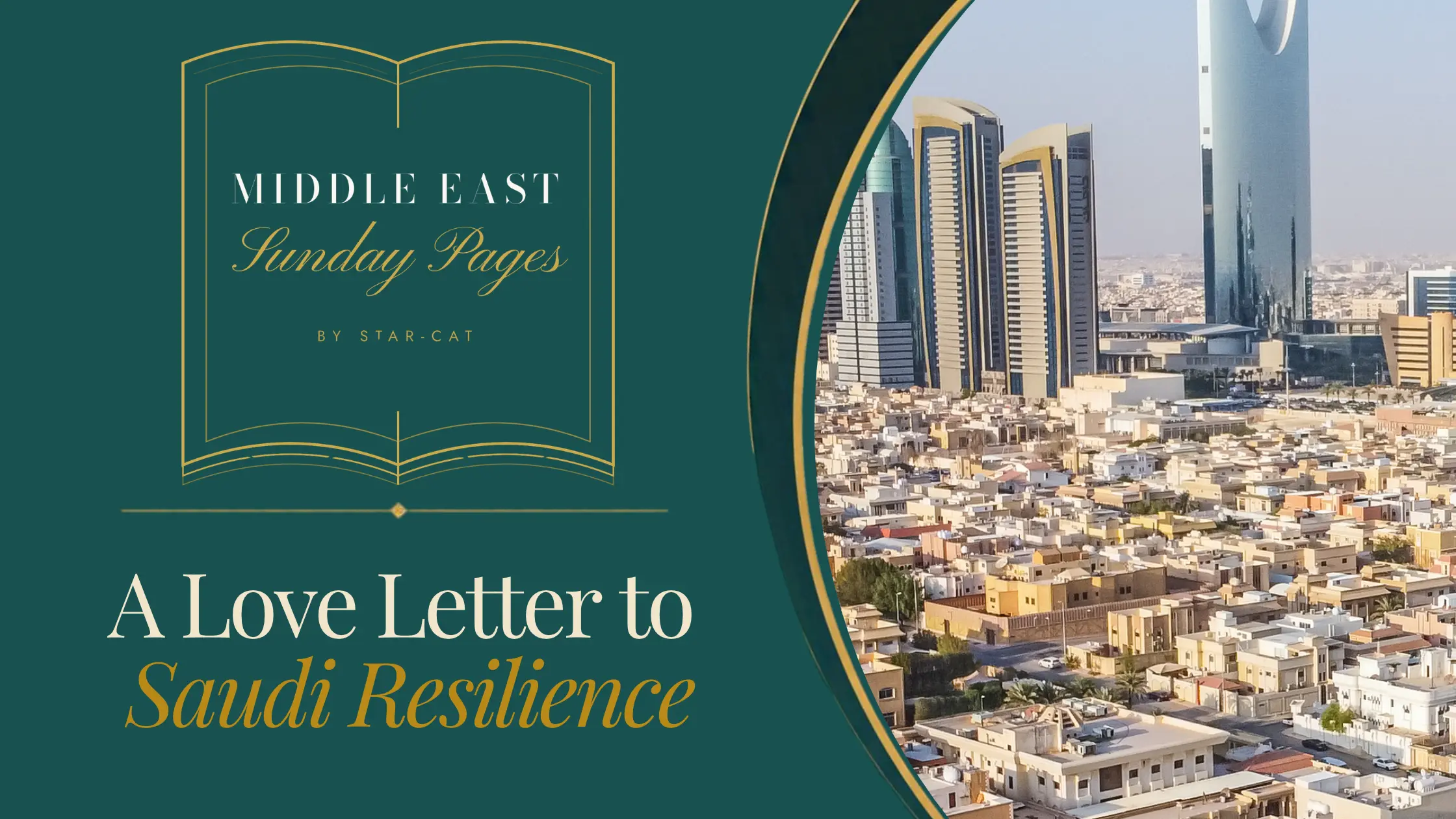
Joy and Sorrow, Four Days Apart: A Love Letter to Saudi Resilience
In October 2026, Saudi Arabia celebrated its first Gulf Cup win in 22 years and, four days later, mourned the deadliest of a series of attacks on Riyadh’s airport. Within 48 hours, ministers, CEOs and conference organisers were back at work. That is Saudi resilience: not ignoring the danger, but keeping commitments through it. Western businesses will be judged by how they behaved this week.
On Tuesday 6 October, Saudi Arabia beat the UAE 2-0 in Jeddah to win the Arabian Gulf Cup for the first time in 22 years.
On Saturday 10 October, an attack on King Khalid International Airport in Riyadh killed at least 12 people and wounded more than 300.
Four days apart. Joy, then sorrow.
And on Monday 12 October, in Riyadh, Saudi Arabia’s Minister of Energy, Prince Abdulaziz bin Salman, opened the WPC Energy Congress as planned. “The word ‘fear’ in the Saudi dictionary does not exist,” he told the room.
I have spent this week watching how people in Saudi Arabia responded. This post is not about politics. It is about people, and about what Western businesses should learn from Saudi resilience about doing business in Saudi Arabia when the news turns hard.
What happened in Saudi Arabia between 6 and 12 October?
In the space of seven days, Saudi Arabia went from national celebration to national grief, and then straight back to work. These are the confirmed facts:
- Tuesday 6 October: Saudi Arabia beat the UAE 2-0 in the final of the 27th Arabian Gulf Cup at King Abdullah Sports City in Jeddah. Hammam Al-Hammami and Firas Al-Buraikan scored. It was Saudi Arabia’s first Gulf Cup title since 2004, and its fourth overall. The same day, a strike on Abha airport killed 2 women and injured 28.
- Wednesday 7 October: a strike on Riyadh’s airport killed 1 person and injured 8.
- Thursday 8 October: a further strike on Riyadh’s airport killed 3 Saudi citizens, among them Saudia pilot Captain Hamoud Ali Alkalthami.
- Saturday 10 October: the deadliest attack, on King Khalid International Airport in Riyadh and attributed to Yemen’s Houthis, killed at least 12 people and wounded 309, according to Saudi Arabia’s General Authority of Civil Aviation (GACA).
- Sunday 11 October: another strike on the airport killed 1 Pakistani resident and injured 11. The same day, International Energy Forum ministerial talks went ahead in Riyadh, and Prince Abdulaziz pledged that Saudi Arabia would keep supplying its customers regardless of circumstances.
- Monday 12 October: the WPC Energy Congress opened in Riyadh, the first time the Kingdom has hosted it.
My thoughts are with every family who lost someone this week, from every one of those countries. An international airport is a crossroads. The list of the dead shows how many people pass through Riyadh, and how many lives this touched.


What did Saudi Arabia do next?
It carried on. Within 48 hours of Saturday’s attack, ministerial talks and a major international congress went ahead in Riyadh. Not with denial, and not by pretending nothing had happened, but by keeping commitments. With Riyadh’s airport closed, people who had meetings and events in the capital did not simply cancel. Some drove around 10 hours from Jeddah to Riyadh to be there, because they had said they would be.
A Saudi CEO I know put it simply when I asked how things were: the conferences are going on, and we are continuing. No speech. No drama. Just a plan for the week.
Then, on Monday, the Minister of Energy opened the WPC Energy Congress with the line that has stayed with me all week: “The word ‘fear’ in the Saudi dictionary does not exist.” He was not dismissing the danger. In the same speech he said that “the events of recent weeks are serious”. He also said: “Pipelines do not repair themselves. People do.” And: “Resilience is built before a crisis begins.”
That last line is the one Western businesses should write down.
Why does Saudi resilience matter to Western businesses?
Saudi resilience matters because it tells you what your Saudi partners will remember about you, long after the headlines have moved on. In a week with 5 attacks on the country’s airports, they noticed who called and who went quiet.
In a crisis, people notice who shows up. They notice who called, who kept their deadline, who asked how they could help, and who went quiet. Saudi Arabia is a market where business relationships run long. How you behaved in the hard week becomes part of how you are known. I have written before that when the Gulf is on fire, relationships are not, and this week proved it again.
I wrote in this week’s Gulf Desk that joy and sorrow arrived four days apart. What moved me most was not the speed of the recovery. It was the dignity of it. The same people who filled the streets after the Gulf Cup win were, four days later, mourning, helping, and then getting back to work.
That is a society that has decided, collectively, that its plans are worth defending, and that carrying on is part of how you defend them.
Western firms often see Saudi Arabia only through the headlines. This week, the headlines were about missiles and closures. What was happening on the ground was something else: commitments kept, events held, deals still moving.
If you only read the headlines, you missed the real story.
How did the West respond, and what did that signal?
Most Western governments responded with caution, which was correct. Some Western companies responded with coldness, and Saudi partners noticed the difference. (See this corporate statement of a Tourism Organisation of what not to say)
Governments acted as they should. After the attack on 10 October, the US Mission advised citizens to avoid the airport and the surrounding area. Canada advised against travel to the airport. The UK and Irish embassies issued notices about a “serious incident”. That is their job, and every business should follow official travel advice and its own duty of care.
The problem is what some companies did next. Meetings were cancelled by email, with no call. Trips were postponed with no new date. Holding statements went out that read like risk memos. Some firms simply went silent.
None of this is unsafe. All of it sends a message. To a Saudi partner who drove 10 hours to keep a commitment, a two-line cancellation email says: you are a risk on our spreadsheet, not a relationship.
Western caution is right. Western coldness is a choice, and it is the one that costs you.


How should Western businesses support Saudi clients in a crisis?
Pick up the phone first, then think about business. As a Saudi and Gulf Business Expert, this is the advice I have given clients all week:
- Call your key Saudi contacts personally. Not a template email. Ask how they and their teams are. Do not mention your project in that call.
- Do not cancel by default. Ask your counterpart whether the meeting stands. Offer real alternatives: a video call, a meeting in Jeddah, a firm new date. Follow your government’s travel advice, and say so openly, but keep the relationship moving.
- Keep every deadline you can. Your Saudi partners kept theirs, sometimes at real cost. Deliver what you promised, on time.
- Watch your public tone. Your Saudi clients read LinkedIn. A post about “risk exposure in the Middle East” this week will be read by the people you want to work with.
- Get your information from the ground, not only from Western feeds. Ask the people you work with what is actually happening. This week the headlines and the reality told two different stories.
Those five will help you behave well this week. What they will not do is help you keep up when the next week brings something different.
Which events are going ahead, and which are quietly moving? Which ministers have new responsibilities, and what does that change for your proposal? What is the right message to send this week, and what would land badly? In the Gulf, the news moves faster than most Western teams can read it, and very few people have the time to follow it properly.
Join the Majlis Brief waitlist
This week convinced me to build something I have been planning for a while.
The Majlis Brief is my Tool and Overview for Western leaders working with the Gulf. It will bring you the news that matters, and what to do with it: news alerts, ministerial appointments and changes, a calendar of the dates and events that matter in each of the 6 Gulf states, whats app scripts, masterclasses, and the conferences and events worth attending – all up to date daily.
It is built for leaders who cannot spend hours every day reading the region, but cannot afford to get it wrong.
If you want to be first in, join the Majlis Brief waitlist. I will share early details with the waitlist before anyone else.
This week, Saudi Arabia showed the world what resilience looks like. The Western firms that understood it will be remembered for it. The ones that went quiet will be remembered too.
Frequently asked questions
What happened at Riyadh airport in October 2026? On Saturday 10 October 2026, an attack on King Khalid International Airport in Riyadh, attributed to Yemen’s Houthis, killed 13 people and wounded 309, according to Saudi authorities. It was the deadliest of five strikes on Saudi airports between 6 and 11 October, which together killed 20 people. Airport operations were suspended.
Did the WPC Energy Congress in Riyadh go ahead? Yes. The WPC Energy Congress opened in Riyadh on Monday 12 October 2026, the first time Saudi Arabia has hosted it. International Energy Forum ministerial talks also went ahead in Riyadh on Sunday 11 October, despite the attacks on the city’s airport earlier that week.
What did Prince Abdulaziz bin Salman say about fear? Opening the WPC Energy Congress in Riyadh on 12 October 2026, Saudi Minister of Energy Prince Abdulaziz bin Salman said: “The word ‘fear’ in the Saudi dictionary does not exist.” He also said that “resilience is built before a crisis begins” and that “pipelines do not repair themselves. People do.”
What does Saudi resilience mean for Western businesses? Saudi resilience means keeping commitments through a crisis rather than pausing everything. After the October 2026 Riyadh airport attacks, conferences went ahead and executives drove up to 10 hours to keep meetings. Saudi partners remember which Western firms called, kept deadlines and offered alternatives, and which simply went silent.
Should Western companies keep doing business in Saudi Arabia after the attacks? Western companies should follow their own government’s official travel advice and their duty of care to staff. Within those limits, Saudi business activity has continued, including major energy conferences in Riyadh. Keeping commitments, offering alternatives instead of cancelling, and staying in personal contact all protect long-term relationships in the Kingdom.
How should you support Saudi clients during a crisis? Call your key Saudi contacts personally and ask how they and their teams are before discussing any business. Avoid cancelling meetings by email, offer alternatives such as a video call or a firm new date, keep your deadlines, and be careful about how your company talks publicly about risk in the region.
Doing business in Saudi Arabia? See how Corina Goetz helps Western executives as a Saudi Arabia business strategist.

Corina Goetz is a Saudi and Gulf business expert and the founder of Star-CaT, advising Western companies in Saudi Arabia, the UAE and Qatar. For more than 25 years she has worked with Gulf royal households, ministries and family offices, and helped Western businesses build trust in Saudi Arabia and the GCC. She writes a weekly Middle East blog and the Gulf Desk. If you have a live Saudi deal, book a private consultation.

Related Posts
This Post Has 0 Comments