
Why the Region’s Most Powerful People Still Answer Show Up On Social Media
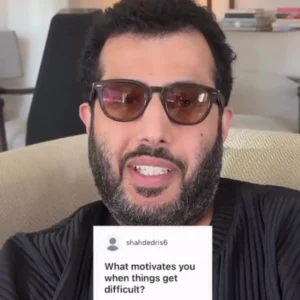
Last month, Turki Alshikh opened his accounts to questions from the public and sat there answering them.
He is Chairman of Saudi Arabia’s General Entertainment Authority and an adviser at the Royal Court. His audience runs into the tens of millions. He does not need visibility and he does not need approval. He answered anyway. On Terence Crawford. On Joshua and Fury. And then on films, and on when things get difficult for him how he copes.
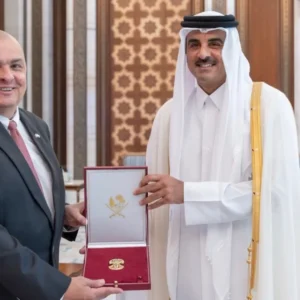
Five days before that, on 19 July 2026, Qatar’s Amiri Diwan published something quieter and, for anyone doing business in the region, more instructive: the Amir, Sheikh Tamim bin Hamad Al Thani, receiving Türkiye’s Foreign Minister at Lusail Palace. The first working meeting published after four days of national mourning for his father.
Two very different men. The same underlying decision. In the Gulf, the people at the top communicate directly, in public, in real time, and they do it themselves.
Most Western firms selling into the region still treat that as a marketing function, two floors down, with a three-day sign-off.
What actually happened in the Gulf on Social Media
Here are the confirmed facts behind both moments:
- Turki Alshikh, Chairman of the General Entertainment Authority and adviser at the Saudi Royal Court, ran an open question-and-answer session with his audience in late July 2026. He took questions on the sport he is best known for, and also on films and personal preferences. His reach is not a rounding error. The analytics firm Hafi put his combined Instagram, YouTube and TikTok audience at roughly 55 million in mid 2026, and he posts separately to millions more on X.
- Sheikh Hamad bin Khalifa Al Thani, Qatar’s Father Amir, died on 12 July 2026, aged 74. The Amiri Diwan declared four days of national mourning. Ministries and public institutions suspended work from Monday 13 July, with employees returning on Sunday 19 July.
- Sheikh Tamim received condolences at Lusail Palace on 13, 14 and 15 July, from 08:00 to 11:30 and again from after Asr prayer until Isha. The Amiri Diwan photographed and published those receptions. Its handout images ran on the Reuters and AFP wires worldwide.
- On 19 July, the first working day after the mourning, the Amiri Diwan published the Amir receiving Türkiye’s Foreign Minister, Hakan Fidan, at Lusail Palace. Flags had returned to full mast. The country was open again, and it said so on the same channels that had carried the grief.
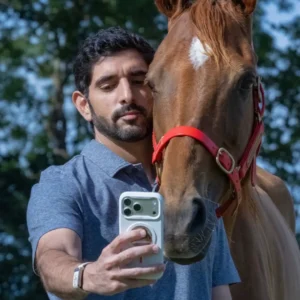
- This is regional practice, not one country’s habit. Sheikh Mohammed bin Rashid Al Maktoum, UAE Vice President, Prime Minister and Ruler of Dubai, has around 9 million followers on Instagram alone, and joined TikTok in 2021 on the stated basis of going where people already are.
- Saudi Arabia and the UAE record among the highest social media penetration rates in the world — ahead of the UK and the United States.
Everything after this is analysis.
Why does one of Saudi Arabia’s most powerful men still answer strangers himself?
Because in the Gulf, communicating a decision is treated as part of making it.
There is no committee sitting between Turki Alalshikh and the person asking him a question. The man with the authority is the man doing the talking, which collapses a step that Western organisations still budget for, staff, and slow themselves down with.
Look at what he answered on. Boxing, yes. Also Batman. That mix is not an accident of a long evening. Being personable is not a break from the seriousness — it is how the seriousness gets received. Access and accessibility are different things. He is not easy to reach because his diary is empty. He answers because being seen to answer is understood, at that level, as part of the job.
What did Qatar signal by going back to work in public?
That the mourning had been fully received, and the country was open — and it signalled it by sequence, not by statement.
For four days, the Amiri Diwan published the grief in full. Heads of state arriving. Sheikhs, ministers, ambassadors and ordinary citizens at Lusail Palace, morning and evening. Nobody had to ask what Qatar was doing or how long it would last.
Then, on the morning of 19 July, the same account published the Amir back at work, receiving a foreign minister.
No announcement said “we are resuming business”. The picture said it, to everyone, at the same time, with no intermediary and no delay. Twenty years ago that message travelled through a communiqué and a newspaper, and it reached the people who read newspapers. Now it is published by the institution itself, and it reaches everyone who has a phone. In Qatar, that is very close to everyone.
For a Western firm with exposure there, this was the most useful piece of business intelligence available that fortnight, and it was free. Your window to send condolences was visible. So was the moment it became appropriate to pick up commercial conversations again. If you were still sending carefully worded nothing on 22 July, you were working from a calendar that nobody else in the room was using — and, as I have written before, the timing of your response is part of the message.
This is the same instinct behind the leadership Sheikh Hamad represented: decide, then make sure the decision is understood.
Why does this matter if you are not a Head of State?
Because your Gulf counterpart is used to reading people through what they publish, and they will read you the same way, before you ever meet.
They will search your name. They will open your profile and scroll your last few months. And they will decide whether you are worth an hour of their time, using material you produced without knowing who was reading it.
You will not get an email about this. Nobody will tell you that a meeting did not happen because of what a director found on a Tuesday evening. The decision gets made off-screen, and you carry on assuming the market is slow.
I have spent years working with this region, and here is what I see most often on a Western executive’s feed in the ninety days before a Gulf meeting: NOTHING. Or a company repost about a product launch in Manchester. Either one answers the only question being asked — does this person understand our market — with a no.
The correction is not to post more. It is to make what you publish do the work of the first meeting before the first meeting.
What Western Executives, Directors, Ceos and MDs should do before their next Gulf meeting
Start by looking at yourself the way your counterpart already has. Five things you can do this month:
- Run the search they will run. Open a private browser window, type your own name, and read the first page of results and your last 10 posts as a stranger in Riyadh would. That is your pre-meeting brief, and somebody has already read it.
- Post about their market, not your product or your upcoming trip to the region. As a working ratio, four posts that show you understand what is happening in the region for every one that mentions what you sell. Your product page already exists. What does not exist is evidence you are paying attention.
- Show your face, and use the format the region is actually using. Short vertical video, spoken to camera, in the room you are genuinely in. Gulf leaders and institutions adopt new formats early and use them personally. Personable travels further here than polished.
- Name the person who can publish inside the hour. Moments in the Gulf arrive without notice and close in a day. If publishing requires three approvals, you will be late every time, and you will never find out what it cost.
- Know when to say nothing. Silence during a mourning period is correct. Silence on the day a country returns to work is a missed opening. The register changes with the moment, and it changes by country.
Those five will move you forward on your own. What they will not tell you is what to say in the first hour of a moment like 12 July, in which register, on which platform, and for which country — because Saudi Arabia, Qatar and the UAE do not read the same message the same way. That judgement is the part that decides whether the trust is there before you sit down.
That is what I am teaching in my masterclass on 7 September: how executive visibility, AI and cultural intelligence work together to build commercial trust in the Gulf before the first meeting ever happens. If you sell into the region, that is where I would start.
Turki Alshikh spent an evening answering people who will never do business with him. Qatar published its first meeting back on the same feed that had carried its grief. Neither of those is marketing. In the Gulf, the communication is part of the decision — and if you publish nothing, that is read as a decision too.
Frequently asked questions
Why do Gulf leaders use social media so directly? Because in the Gulf, communicating a decision is treated as part of making it, and the person with the authority is usually the person doing the talking. Governments and senior figures publish directly to national audiences with no intermediary, which is why official accounts, rather than newspapers, now carry the first word on national moments.
What is executive visibility in the Gulf? Executive visibility in the Gulf means being publicly credible to a senior Gulf audience before you ever meet them. Your counterpart will search your name and read your recent output to judge whether you understand their market. What they find either opens the door or quietly closes it, and you rarely find out which.
How did Qatar signal the end of the mourning period for Sheikh Hamad? By publishing the Amir back at work. Four days of national mourning began on 12 July 2026 and employees returned on Sunday 19 July. That morning, Qatar’s Amiri Diwan published Sheikh Tamim bin Hamad Al Thani receiving Türkiye’s Foreign Minister at Lusail Palace — the first working meeting released after the mourning.
Does LinkedIn matter for doing business in Saudi Arabia? Yes, and not as a follower-count exercise. Saudi Arabia and the UAE have among the highest social media penetration rates in the world, and senior people there routinely read a counterpart’s public output before agreeing to meet. A profile showing genuine regional understanding does work that a pitch deck cannot.
How often should a Western executive post about the Gulf? Consistency matters more than volume. A useful working ratio is four posts demonstrating that you follow what is happening in the region for every one about what you sell. The purpose is evidence of attention, not reach.
What should a Western firm publish during a Gulf mourning period? Acknowledge the loss quickly and sincerely, then pause promotional content until the country returns to work. Watch the official channels rather than guessing: in Qatar in July 2026, the Amiri Diwan itself made both the mourning and the return to business visible, on the day.

Corina is a Middle East Strategist and Founder of Star-CaT. Over the past 20 years, she's helped thousands of clients overcome their anxieties and misconceptions about the Gulf region, and take advantage of the incredible opportunities available to them.

Related Posts
This Post Has 0 Comments