
How to Navigate Eid Without Looking Like You Just Remembered It Exists
Let me be honest with you.
Every single year, I watch the same scene play out with clients from Dubai, Riyadh, Abu Dhabi, and Doha. Eid is three days away, and someone — usually a well-meaning expat who has lived in the Gulf for years — suddenly realises they have absolutely no idea what they are doing. They are frantically Googling “what do you say at Eid,” practising the pronunciation under their breath, and panic-buying a box of dates from the petrol station at 9 PM the night before.
And then they walk into the office and say “Happy Eid!” with the energy of someone who just discovered the holiday existed that morning. But — your Gulf colleagues notice. They do not say anything, because they are gracious like that. But they notice. If you want to actually succeed in the Gulf — not just survive it — cultural fluency is not optional. It is the invisible currency that either opens doors or quietly closes them. And Eid? Eid is one of the biggest tests of that fluency all year.
So let us fix this. Right now. Before you walk into another Eid looking like you just stumbled in from a parallel universe where this was never on your radar.
First, Understand What Eid Actually Is (Beyond the Day Off)
There are two Eids, and yes, you need to know the difference.
Eid Al Fitr marks the end of Ramadan — the holy month of fasting. It is a celebration of spiritual discipline, gratitude, and community. It lasts a few days and comes at the end of an entire month where your Muslim colleagues have been fasting from dawn to sunset, managing their workload, and navigating back-to-back meetings while running on zero calories and maximum faith. Eid Al Fitr is the exhale after all of that. Often there can be a week off, schools are off and many people go on holiday.
Eid Al Adha is the Festival of Sacrifice. It comes roughly 70 days later and commemorates the willingness of Ibrahim to sacrifice his son as an act of obedience to God. It is deeply spiritual, often more significant in many Gulf households, and involves charitable giving — the sacrifice of livestock shared with family, neighbours, and those in need. Many people go for Hajj (the pilgrimage during this time). Again schools are off and many go on holiday.
Why does this matter to you professionally? Because walking into the office saying “Happy Eid, enjoy your holiday!” flattens one of the most spiritually significant moments in your colleagues’ year into a long weekend. You are not wrong — but you are not right either. There is a difference between knowing the name of something and understanding its weight.
The Greeting: Get This Right or Get Out
The single most important thing you will do during Eid is the greeting. And it is not complicated — but it has to be intentional.
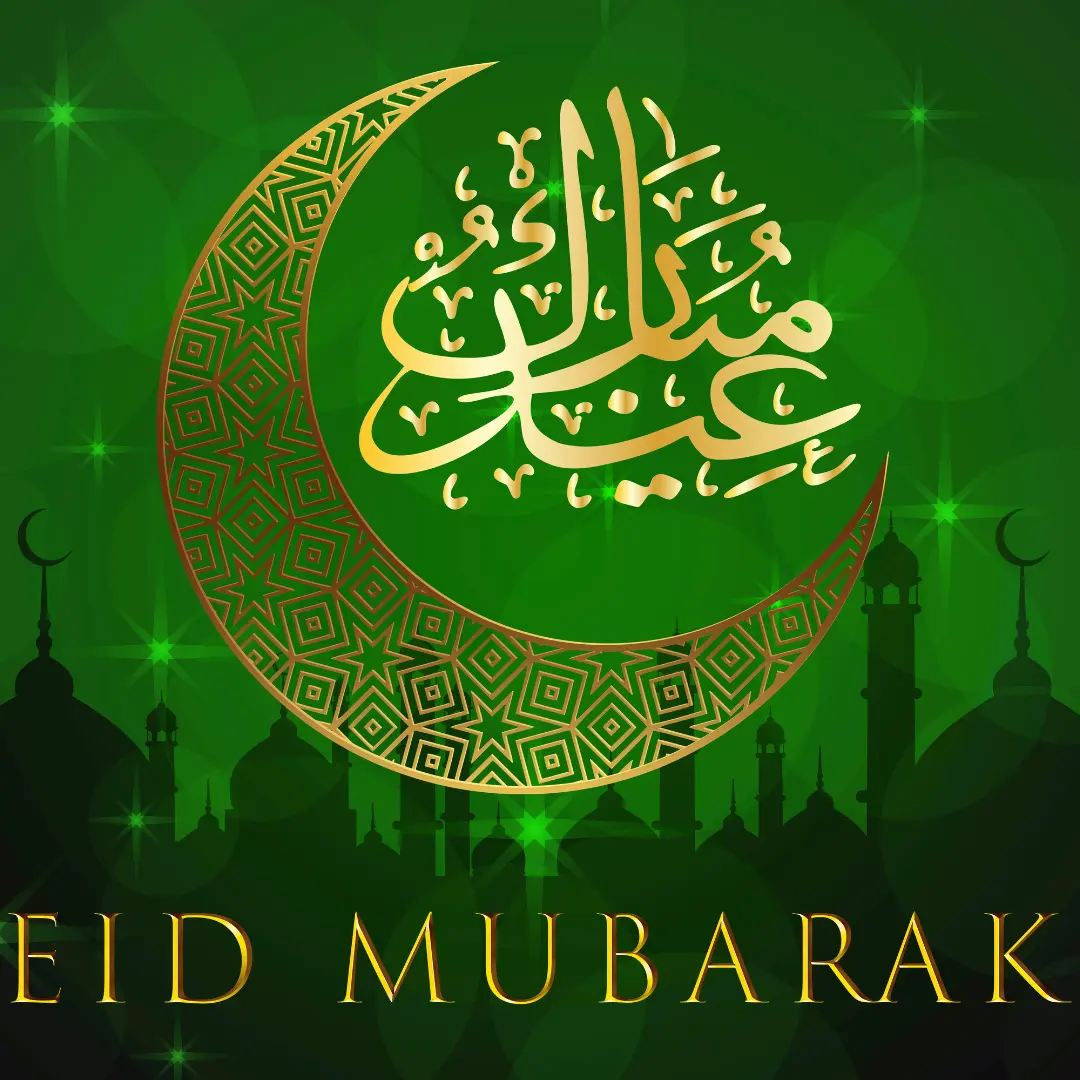
“Eid Mubarak” — Blessed Eid. This is your go-to. Safe, warm, universally understood across the Gulf.
The response you will often hear back is “Mubarak Alaik” (to a man) or “Mubarak Alaiki” (to a woman) — meaning “Blessed upon you too.” If you can return the greeting in Arabic, even imperfectly, the warmth you get back will surprise you. Gulf nationals deeply appreciate the effort.
Now, here is what to avoid:
- “Happy Holidays” — this is Eid, not a vague festive season. Name it.
- “Is it Eid already?” — this is the verbal equivalent of showing up to someone’s wedding and saying “Oh, is this today?”
- “Do you get time off?” — yes, and they would prefer you ask about the meaning rather than the days off.
- A WhatsApp forward with a stock image and a generic caption — forwarded at 11:47 PM the night before. Everyone can see the metadata on that energy.
A personal message, even brief, always wins. “Wishing you and your family a blessed Eid Mubarak” sent before the holiday begins says: I thought about you. I planned for this. I respect what this means to you.
The Office: How to Show Up Correctly
Whether you are in the UAE, Saudi Arabia, Qatar, or Bahrain, Eid changes the energy of the workplace. Here is how to move through it with grace.
Before Eid: The days leading up to Eid — especially the final days of Ramadan — are significant. Colleagues may be more spiritually focused, tired from late-night prayers (Tarawih), and emotionally in a different space. This is not the time to schedule intensive all-day strategy sessions or pile on the urgent requests. If you need something before the holiday, ask early and be respectful about timelines. The phrase “before you break for Eid, could you…” lands very differently from “I need this end of day on the 18th” with no acknowledgment of what is happening.
During Eid: Do not message. Do not email. Do not “just quickly check in.” Eid is family time, prayer time, visitation time. It is not a slow workday where people are secretly checking their phones. Respect the boundary the same way you would want your own significant holidays respected.
After Eid: When your colleagues return, the greeting is not over. “Eid Mubarak, how was your Eid?” is a genuine conversation opener — and people love talking about it. The food. The family. The gatherings. Ask. Listen. You will learn more about Gulf culture in a ten-minute post-Eid conversation than in six months of observation.
If You Are Invited to Someone’s Home — Read This Twice
Being invited to a Gulf home for Eid is not a casual occurrence. It is an honour. It means someone has decided you are worth welcoming into the most personal space of their celebration. Do not show up empty-handed. Sweets, chocolates, or a box of premium dates are always appropriate. Flowers can work in some contexts but ask first — preferences vary. Avoid anything with alcohol, obviously.
Dress modestly and conservatively. This is not a brunch. Long sleeves and covered knees may be appropriate in more traditional households — when in doubt, ask your host or someone who knows the family.
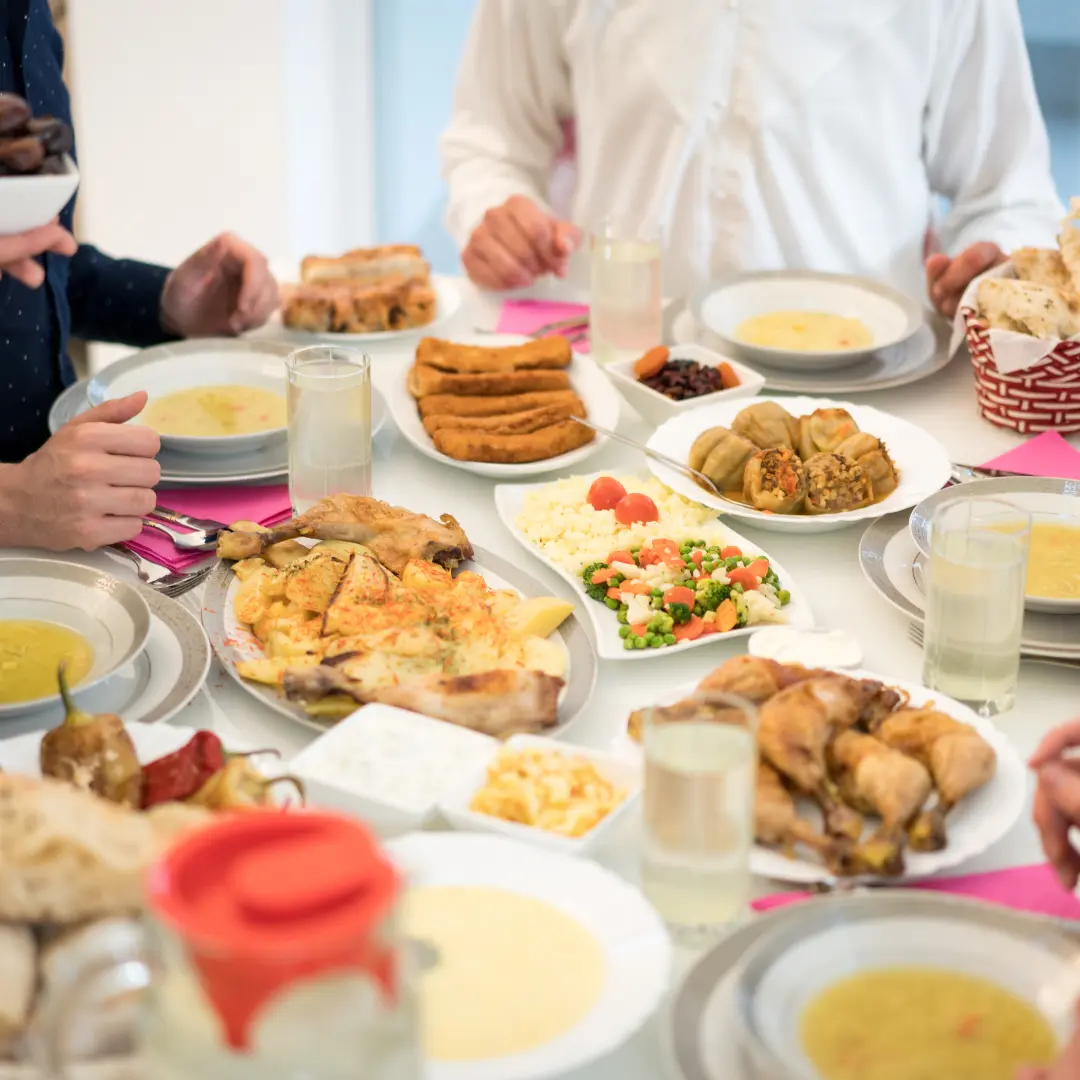
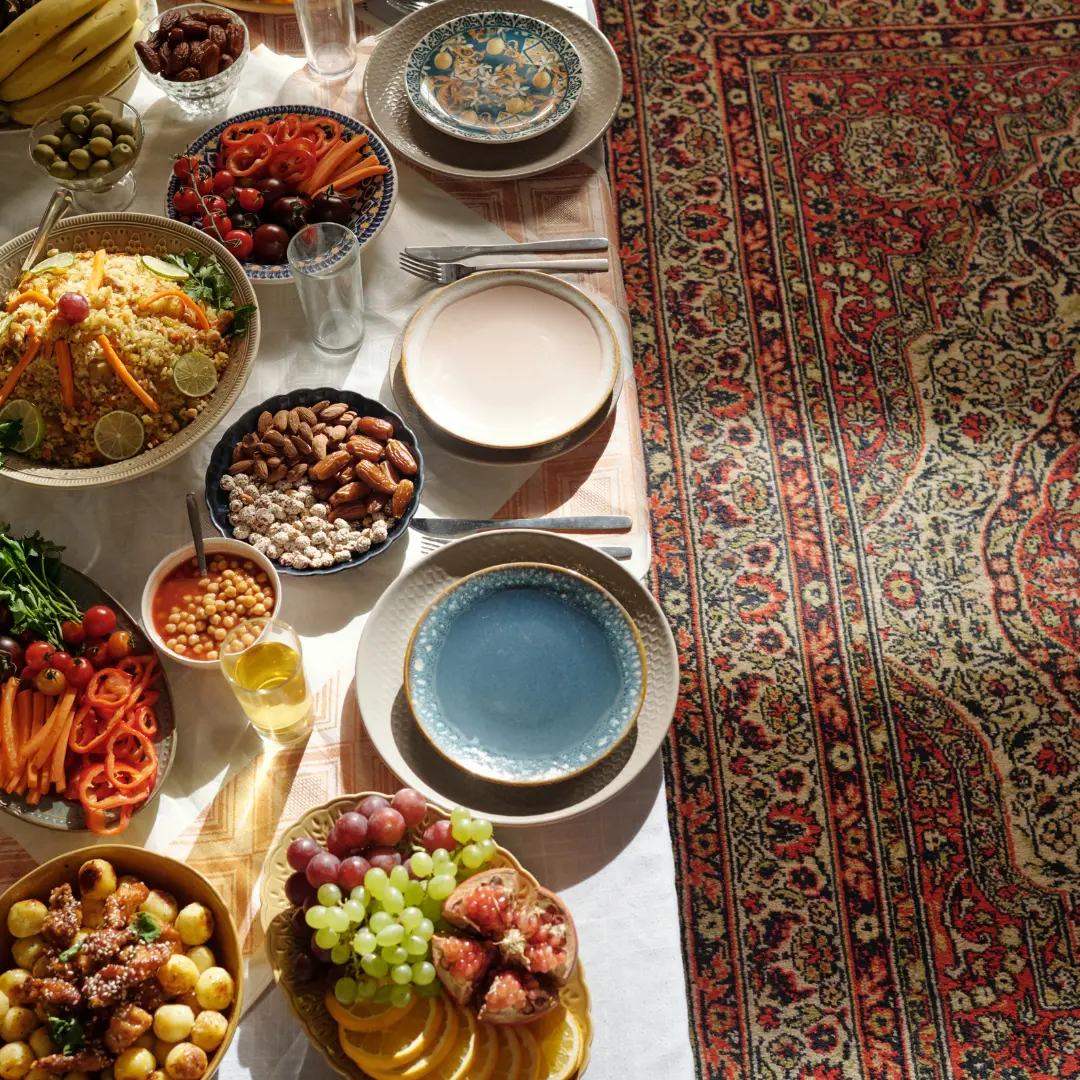
Expect food. A lot of food. Refusing repeatedly is rude. A polite “just a little, thank you” is far better than a flat no. You will likely be offered tea, coffee (gahwa — the lightly spiced Arabic coffee), dates, sweets, and a full meal in quick succession. Accept graciously.
Timing matters. In many Gulf households, you do not arrive and leave on a strict schedule. Visits flow. Be present. Do not be checking your phone constantly. Do not rush out the door after 45 minutes because you have plans. If you cannot commit to an Eid visit properly, do not accept the invitation.
The Business Side: Eid Gifting Done Right
Corporate gifting during Eid is standard practice in the Gulf — and it is an opportunity most expats and businesses either miss entirely or handle badly.
A thoughtful Eid gift to a client, partner, or senior colleague signals cultural awareness, relationship investment, and long-term thinking. Premium dates, high-quality sweets, or curated gift hampers are the gold standard. Branded merchandise with your logo slapped on it is not a gift — it is marketing with a bow on it. Avoid at all cost.
If you are managing a team, acknowledge Eid with your Gulf national and Muslim colleagues specifically — not just a blanket office announcement. A personal note, even short, distinguishes you as a leader who sees his or her people.
And if your company sends out a generic “Season’s Greetings” email that lumps Eid in with five other holidays? That is a conversation worth having with your communications team or you can speak to us for a bespoke strategy. Email: support@star-cat.co.uk.
The Mistake That Costs More Than You Think
Here is the one I see most often, and it stings every time.
Someone who has worked in the Gulf for three, five, sometimes ten years — still treating Eid like an inconvenience on the project calendar. Still scheduling deliverables that land on the first day of Eid. Still sending late-night messages during the holiday. Still greeting colleagues with a rushed “oh yeah, Eid Mubarak” on the way to the coffee machine.
And then wondering why — despite their hard work, their competence, their results — they are never quite in with their Gulf colleagues. Why the trust never fully forms. Why the best opportunities seem to quietly go to someone else.
Cultural fluency is not soft skill. In the Gulf, it is the skill. The technical ability gets you hired. The cultural intelligence keeps you growing. This is exactly why we do what we do. Reach out if you need more help.
You Can Actually Learn This Properly
What I have shared here is enough to get you through Eid without a disaster. But navigating Gulf culture goes so much deeper than one holiday — and the stakes in a high-context, relationship-driven business environment are higher than most people realise until they’ve already made the costly mistake.
This is exactly why I built the Gulf Success Etiquette Playbook — a practical, no-fluff course designed for professionals who are serious about succeeding in the Gulf, not just passing through it. From Ramadan to Eid, from business majlis protocol to the unspoken rules of building trust with Gulf nationals, it covers what no one tells you in the onboarding pack.
Because the Gulf rewards those who understand it. And it quietly sidelines those who do not.
If you are ready to stop guessing and start navigating with genuine confidence — the Gulf Success Etiquette Playbook is for you. You can get it here.

Corina is a Middle East Strategist and Founder of Star-CaT. Over the past 20 years, she's helped thousands of clients overcome their anxieties and misconceptions about the Gulf region, and take advantage of the incredible opportunities available to them.

Related Posts
This Post Has 0 Comments